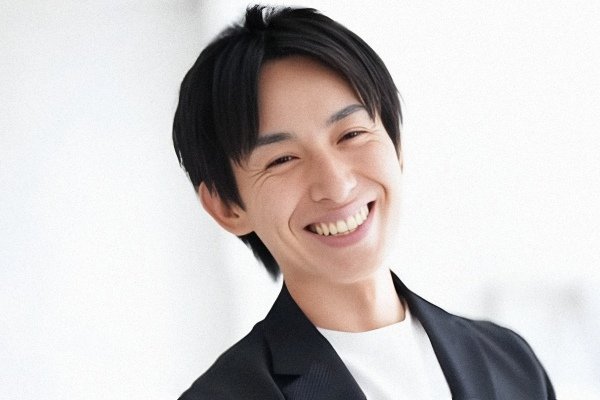
Rintaro Ukon
1. Congratulations on winning in the European Photography Awards! Can you share a little about yourself, what inspired you to pursue photography, and how has your journey evolved since your first shot?
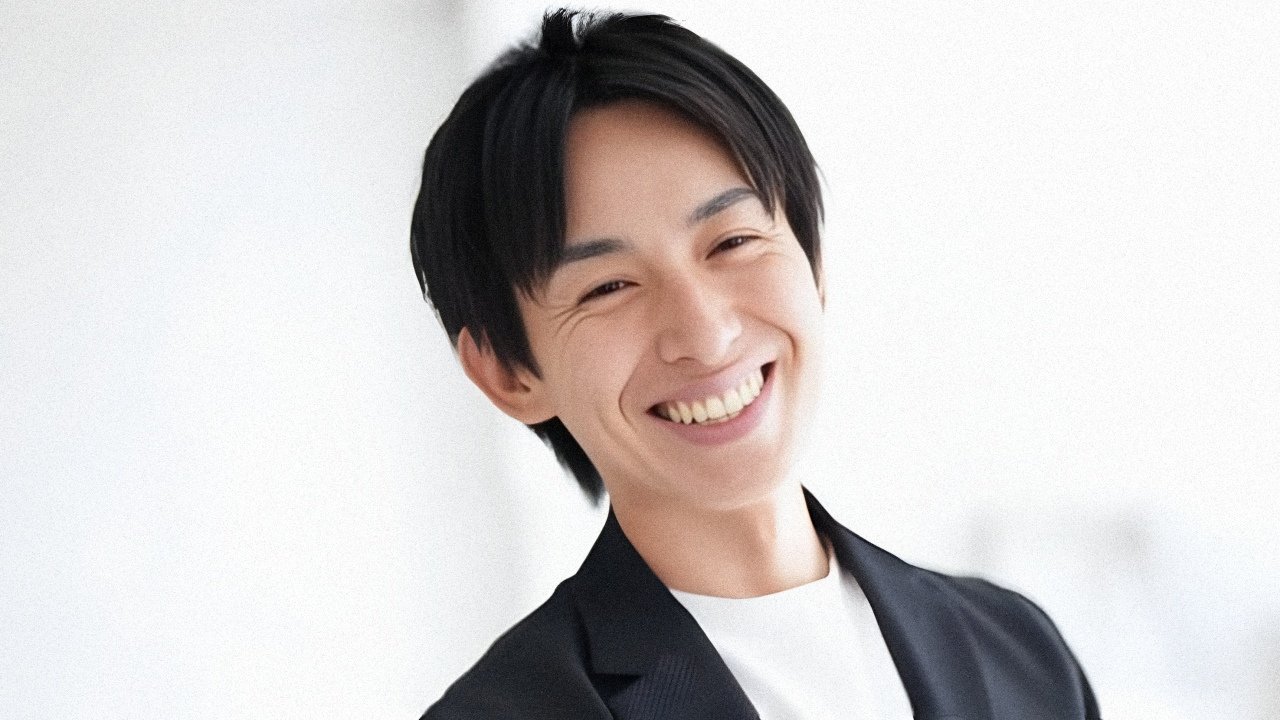
I’m Rintaro Ukon, a photographer and visual artist based in Tokyo, Japan. I have been working professionally in photography for about 18 years.
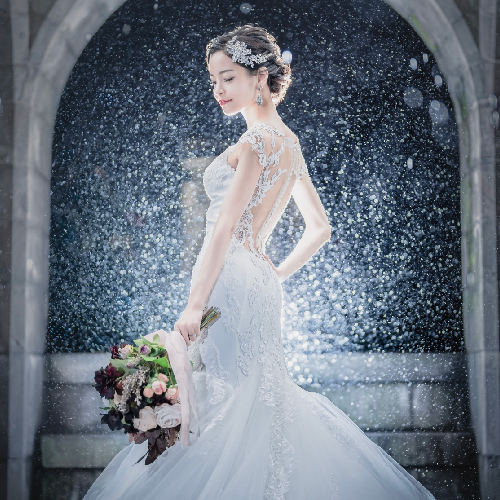
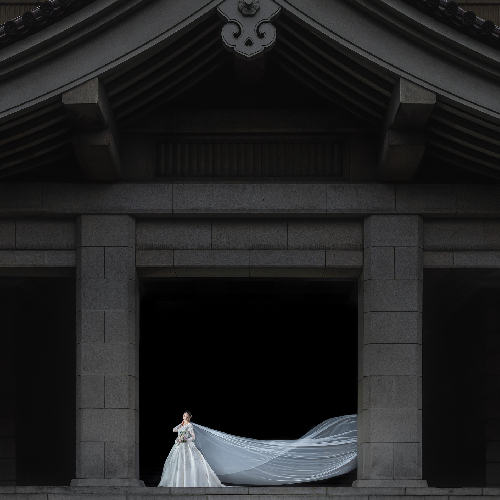
Today, I work across a wide range of genres, including fine art, underwater, wedding, landscape, and architectural photography. I think the moment I truly became serious about photography goes back to my university days, when I was working at an electronics store.
Ironically, I was actually a video camera salesperson, but I couldn’t stop being drawn to the DSLR section right next to me!
I was fascinated by the exhilarating burst of the Canon EOS 40D, the crisp shutter sound of the Nikon D60, and the distinctive, almost addictive sound of Olympus DSLRs. Then there were the photographs in the camera catalogues — images with a depth and atmosphere that I felt I could never achieve with the compact digital camera I owned at the time.
I was completely captivated. Photography soon became my passion, and while I was still a university student, I gradually began earning money by photographing coming-of-age ceremonies and portraits.
After graduating, I initially joined a regular company, but somehow I ended up becoming the in-house photographer there as well.
Once that happened, I could no longer suppress the desire to make my living entirely through photography. So I decided to leave and join the photography studio of a five-star hotel. There is no doubt that this environment allowed my abilities as a photographer to truly flourish, and I remain deeply grateful for that experience.
Fortunately, I eventually became highly sought after by clients, with my schedule booked far in advance. But even then, my ambition wouldn’t stop growing. Despite being in the middle of a very successful period, I decided to become independent after about two years.
More than anything, I wanted the freedom to photograph what I truly wanted to photograph — to follow wherever my own heart led me. Nearly ten years have passed since then.
I left the hotel environment behind and began photographing weddings and location shoots throughout Japan. Today, my work has expanded internationally as well, taking me overseas for both commissioned photography and personal artistic projects.
Looking back, photography completely changed the course of my life. It ignited something inside me and has introduced me to so many people, places, and experiences around the world.
For that, I remain deeply grateful to photography itself.
2. Can you share the story or inspiration behind your award-winning piece? How does winning this award make you feel about your journey in photography?
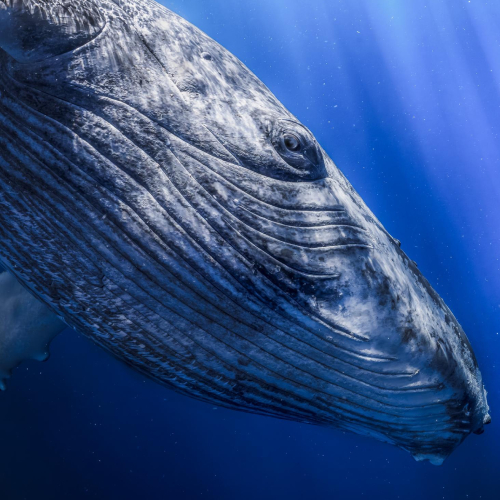
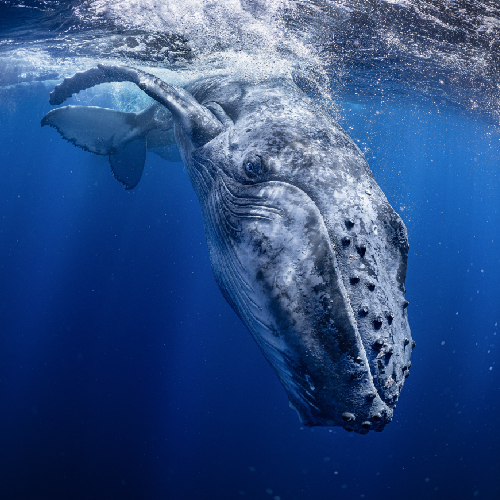
My award-winning work, Madonna of the Blue, was photographed in Tonga while freediving with a humpback whale mother and her calf.
No scuba tanks, artificial lighting, or staging were used. I entered the water carrying only my camera and relied on breath-hold diving, natural light, and careful observation of the whales.
The most important thing was not to control the scene, but to become as unobtrusive as possible. I maintained a respectful distance, controlled my breathing, buoyancy, and body position, and waited for the whales to determine the encounter.
At one moment, the relationship between the mother and calf formed an almost sculptural composition in front of me. I felt something both powerful and extraordinarily gentle — almost like a Madonna and child beneath the sea.
Receiving a Platinum distinction for this photograph is meaningful because it confirms that a very quiet encounter between nature, life, and a photographer can communicate across cultures.
For me, the award is not the destination. It is encouragement to continue going deeper.
3. How do you decide which photo to submit for a competition?
I try not to choose photographs simply because they are technically impressive.
I ask myself whether the image contains something that remains in my mind after I stop looking at it.
Does it have a clear visual structure? Does it contain an emotion or idea beyond technique? Is there something in it that belongs to my own way of seeing the world?
I also consider the character of each competition and category, but ultimately I want to submit photographs that I would still believe in even if there were no award attached to them.
4. What first made you pick up a camera?
I had always been close to nature growing up, and I loved drawing and looking at beautiful things. My first camera was probably a compact digital camera that I bought for a short-term study abroad program when I was in high school.
At first, it was simply a tool for casual memories. But somewhere along the way, photography began to stir something inside me. I remember enjoying the act of taking pictures itself, and I also had a feeling that somehow I was seeing and expressing things a little differently from other people. That feeling stayed with me.
When I became a university student, I eventually bought my first DSLR. From there, photography gradually became much more than a hobby. I have now been working professionally for more than ten years, and I am still photographing today.
5. What’s your favorite type of photography, and why do you love it?
It is difficult for me to choose only one genre because I photograph very different subjects — from weddings and architecture to landscapes and underwater life. But underwater photography is particularly special to me.
Underwater, humans lose many of the things we normally depend on. We cannot breathe freely, move normally, or completely control our environment. That limitation changes the way I see.
When freediving, I have to become quiet, control my breathing, and adapt to the movements of the ocean and the animals around me. I love that photography becomes less about controlling the world and more about listening to it.
6. What’s your go-to camera setup, and why does it work best for your projects? What’s your favorite feature?
My primary system is Sony Alpha. For high-resolution work, I often use cameras such as the Sony α1 series and α7R series, depending on the project, combined with wide-angle lenses for architecture, landscape, wedding, and underwater work.
What matters most to me is reliability.
When photographing weddings, wildlife, or underwater encounters, the decisive moment cannot simply be repeated. Fast and accurate autofocus, high image quality, dynamic range, and dependable operation allow me to concentrate on what is happening in front of the camera rather than on the camera itself.
My favourite feature is probably the ability of modern cameras to respond extremely quickly while still producing files with enough information to express very subtle differences between light and shadow.
7. If someone looked at your work, what’s the one thing you’d want them to feel?
I would like them to notice the value of something they might normally pass by.
A small light inside darkness. A quiet gesture between two living beings. A familiar place transformed for only a few seconds.
I am interested in the movement between the ordinary and the extraordinary.
If someone sees one of my photographs and then looks at their own everyday world a little differently, that would make me very happy.
8. What was the most challenging part of capturing your winning shot?
The greatest challenge was being present without disturbing the whales.
This image was photographed while freediving, without scuba equipment or artificial lighting. That meant managing breath-hold, buoyancy, body position, camera operation, current, and distance from the animals at the same time.
But the physical challenge was only part of it. The more important challenge was restraint.
When something extraordinary happens in front of a photographer, the instinct is often to move closer or chase the image. With wildlife — especially a mother and calf — I believe the photographer sometimes has to do the opposite.
I waited. The photograph happened because I allowed the whales to determine the encounter.
9. Is there a specific place or subject that inspires you the most?
The ocean is one of the places where I feel most strongly connected to photography.
But more broadly, I am inspired by situations where two opposing qualities exist together: darkness and light, strength and tenderness, stillness and movement, order and chaos.
That can happen underwater, in a city at night, inside architecture, during a wedding, or in a landscape during bad weather.
So perhaps I am less inspired by a specific place than by moments when the familiar world suddenly reveals another side of itself.
10. Who or what has been your biggest influence in photography?
I do not feel that I have been shaped by only one photographer. My influences come from many different places. I grew up close to nature, surrounded by the sea, rivers, landscapes, and constantly changing weather.
The scenery I saw as a child, the pictures I drew, the films I watched, and the fantasy worlds that fascinated me all became part of the way I see. I have also been influenced by light and shadow in cinema and painting, and by the unpredictable changes created by nature itself.
All of those things have shaped the way I think about photography. But I believe my greatest teacher has been experience itself. And perhaps just as importantly, the people who look at my photographs and the people who have trusted me enough to ask me to photograph them.
I am here today because of them. Their trust and their reactions have continually made me want to improve, to grow, and to keep photographing. That gratitude is something I never want to forget. I want to carry it with me throughout my life.
11. What message would you share to inspire photographers to participate in photography awards, and what advice would you give to help them excel in the competition?
Photography awards can be valuable because they force us to look at our own work from outside ourselves. My advice is not to chase awards by trying to imitate photographs that have already won.
Instead, understand why you made the photograph. Technical quality and presentation matter, of course. Study the category carefully, edit your submission precisely, and choose the strongest image rather than the largest number of images.
But after that, ask yourself a harder question: Could this photograph only have been made by me?
International competitions bring together photographers from many countries. Technique alone is not enough. A personal point of view is what gives an image the possibility of remaining in someone's memory.
12. What’s one piece of advice for someone just starting in photography?
Learn to observe before learning to impress. Modern cameras can produce beautiful images very easily, but the most important skill is still seeing.
Look at how light changes a face. Look at what happens at the edge of the frame. Watch people before pressing the shutter. Return to the same place in different weather. And take photographs of things you genuinely care about.
Technique can be learned. A way of seeing has to be developed.
13. What role do editing and post-processing play in your creative workflow?
Post-processing is an important part of my photographic expression, but I do not see it as a way to rescue an image that did not work.
The foundation has to exist in the original photograph: light, composition, timing, and emotion.
Editing allows me to refine what I felt at the moment of capture.
I often work carefully with tonal relationships, contrast, colour, and especially the balance between light and shadow. Sometimes reducing information is more important than adding it.
My goal is not to show how much post-processing was done. Ideally, the viewer should simply feel that every element belongs where it is.
14. How do you see technology, like AI, influencing the future of photography and your own approach?
I am very interested in AI and emerging technology, and I believe they will dramatically change photography.
AI can already assist with selection, editing, organisation, research, communication, and many parts of the creative workflow. In the future, the boundary between photography, moving image, 3D, and other forms of visual art will become increasingly fluid.
I welcome that. At the same time, I think technology makes something else more valuable: real experience. Actually entering the ocean. Holding your breath beside a whale. Standing in bad weather. Meeting a person. Waiting for light that may never come.
As synthetic images become easier to create, the story behind a real photograph — the experience, intention, and physical presence of the photographer — may become even more important.
I want to use AI to expand what I can create, while protecting the value of experiences that cannot be generated.
15. If you could photograph anything or anyone in the world, what would it be?
Perhaps I am not particularly attached to any one specific person, place, or subject.
No matter how famous, extraordinary, or magnificent something may be, if it does not move my heart, then for me, no real meaning is born from it.
So what I want to photograph is whatever makes my heart tremble. Something I cannot help wanting to photograph. I want to continue searching for those moments.
And if I could wish for one thing, it would be to reach a point where everything that catches my eye can appear that way to me. To see the world with that kind of sensitivity. That is the path I want to continue walking as a photographer.