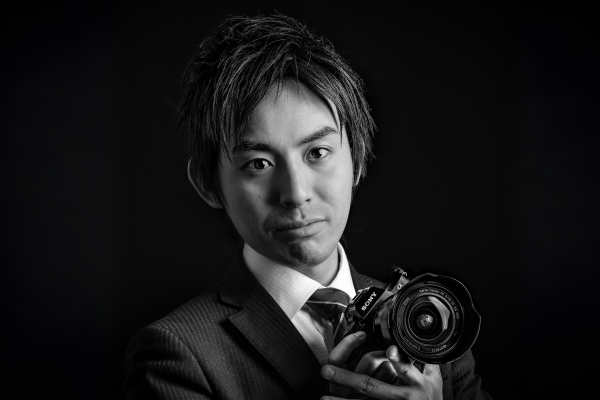
Rintaro Ukon
1. Congratulations on winning in the European Photography Awards! Can you share a little about yourself, what inspired you to pursue photography, and how has your journey evolved since your first shot?
I was born in Fukui, Japan, and began my career as a landscape photographer before expanding into wedding, underwater, and fine art photography. Perhaps it was the countryside where I grew up that first inspired me — the realisation that photography could preserve not only what I saw, but also what I felt.
Although I initially pursued a professional career in law and even went to graduate school, I found myself completely absorbed by photography. I worked briefly in another field, but continued to shoot professionally until I finally decided that photography alone was the path I wanted to follow.
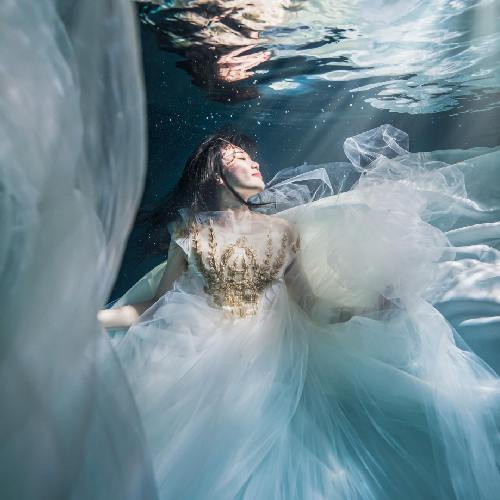
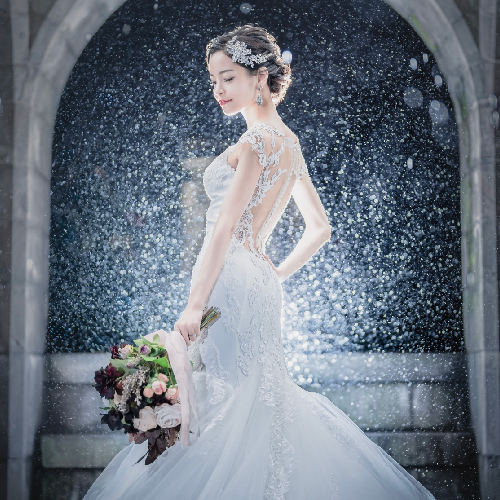
I then joined a wedding photography company at a five-star hotel in Tokyo, before becoming independent within two years. From there, my journey expanded — from photographing weddings across Japan to freediving with whales in the open ocean. Today, I have had the honour of representing Japan at the World Photographic Cup for four consecutive years, and of receiving international recognition such as the “Category Winner of the Year” at the European Photography Awards.
Life is mysterious — passion alone has carried me here. My wish is to let this wellspring of inspiration never run dry, and to continue walking forward with gratitude for every encounter photography brings into my life.
2. Can you share the story or inspiration behind your award-winning piece? How does winning this award make you feel about your journey in photography?
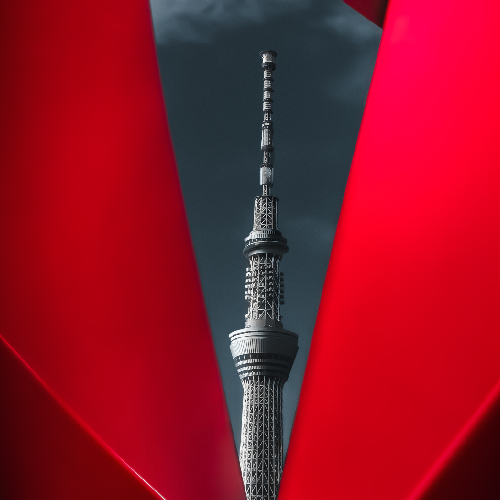
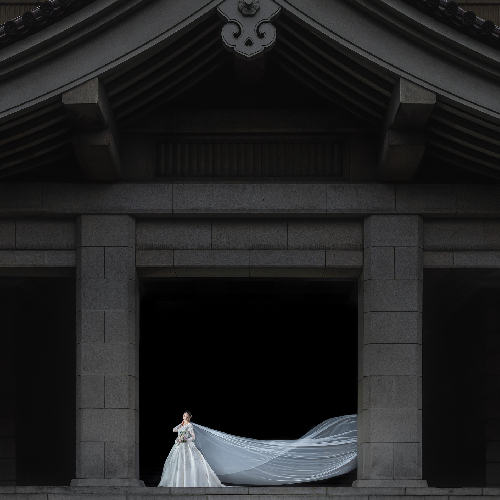
The award-winning piece ICON takes its name from the Greek word meaning “sacred window.” Even the most familiar everyday scenes can be transformed into extraordinary symbols when framed in a certain way. This transformation is not about escaping into the extraordinary, but rather an entry point to look back at daily life with new eyes.
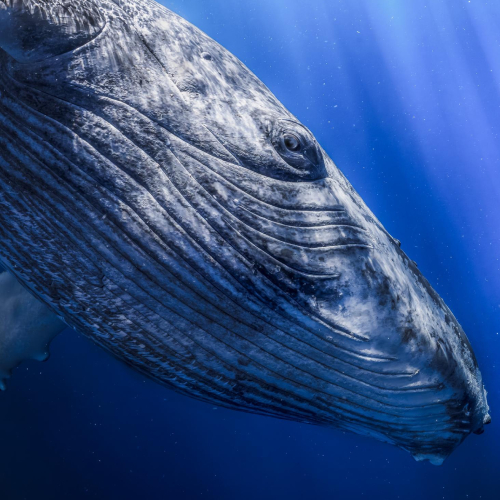
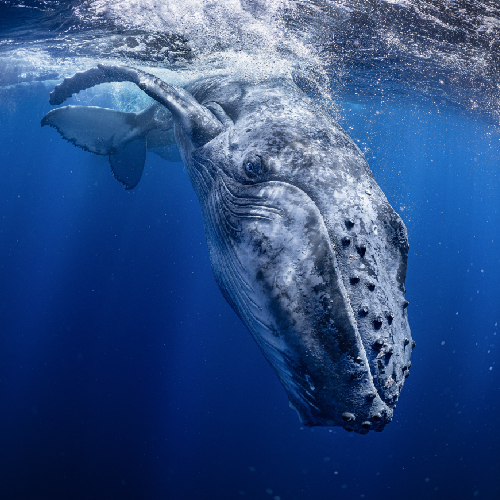
What I wanted to express through ICON is that the everyday moments we often overlook hold the deepest beauty when viewed from a different perspective. Whether photographing whales in the ocean depths or couples in iconic cityscapes, my journey has always been about seeking “windows” that connect the everyday and the extraordinary.
By experiencing the extraordinary, we come to love and appreciate the everyday more deeply — and, in doing so, we learn to embrace ourselves as well. The image that descends upon me in the instant I press the shutter is what became embodied in ICON.
Ultimately, ICON carries a message: I want viewers to recognise that they too are extraordinary beings, and to love their own daily lives — and themselves — with gratitude.
3. How do you decide which photo to submit for a competition?
I choose works that embody my philosophy—images that carry both technical mastery and emotional resonance. For me, a competition entry must not only impress the eyes but also reach the heart. I do not create with the goal of winning awards, but to remain true to the images I genuinely love.
4. What first made you pick up a camera?
I had always loved the nature of my hometown, and I also enjoyed drawing. But when I discovered photography, I was astonished by its power — with just one shutter, I could make the moment before my eyes my own. It felt as if the nature I loved so deeply suddenly belonged to me. That excitement was my true beginning, and from there I began creating the world I envisioned through photography.
5. What’s your favorite type of photography, and why do you love it?
I regularly practice Shinto training in Japan to cultivate concentration. This discipline has taught me to see things simply and essentially, which is why I am drawn to conceptual works like ICON.
Yet my greatest passion is underwater photography through freediving. For me, it is not just about using a camera, but about how I can test my skills and spirit in extreme environments. That challenge excites me deeply and gives my work its vitality.
6. What’s your go-to camera setup, and why does it work best for your projects? What’s your favorite feature?
I use the SONY α1 and α1 II with wide-angle lenses. Their ability to capture decisive moments with unmatched speed and precision gives me complete confidence as a professional.
But beyond performance, I have been a Sony fan since the DSLR era. I still remember admiring the legendary α900 as a student, chasing my dreams with Sony by my side. To now stand here, winning a Category Winner of the Year honour with a Sony camera, feels like a dream fulfilled.
7. If someone looked at your work, what’s the one thing you’d want them to feel?
A realisation—that even their everyday life is sacred and worth cherishing.
8. What was the most challenging part of capturing your winning shot?
The greatest challenge was to capture not just the landmark, but its invisible aura. Light, timing, and framing had to align perfectly to reveal the transformation from ordinary to sacred.
9. Is there a specific place or subject that inspires you the most?
The ocean and the mountains inspire me the most. When I return to nature, I feel both humble and renewed. The vastness of the sea and the silence of the mountains remind me of my smallness, yet also give me the strength to keep creating. Even when I photograph works like ICON in the city, the perspective I bring is shaped by these experiences in nature.
10. Who or what has been your biggest influence in photography?
I have spent many years as a wedding photographer, and that experience has been one of my greatest influences. Weddings taught me that what feels extraordinary for one person can become an everyday moment for another.
Since then, I have felt the responsibility to keep seeking that same sense of wonder and emotion, just as my clients do on their most important day. This philosophy has guided me toward a life of constant exploration.
It led me to embrace spiritual practices such as Shinto waterfall training and extreme challenges like underwater freediving photography. These experiences sharpen my spirit, allowing me to see beyond appearances and capture the invisible essence, as reflected in ICON.
11. What message would you share to inspire photographers to participate in photography awards, and what advice would you give to help them excel in the competition?
Submit works that express your inner truth. Awards are not only about recognition, but a platform to share your philosophy with the world.
Chasing trophies is not the point—it is about questioning the world with your own voice. My advice is to create work that reflects your favourite world, infused with your personal philosophy. Keep looking closely at what you love, and keep pursuing it with honesty. Most importantly, never stop loving yourself. I believe that is the key to making both photography and life shine.
12. What’s one piece of advice for someone just starting in photography?
Shoot what you truly love. Passion is the strongest guide and will carry you through challenges.
13. What role do editing and post-processing play in your creative workflow?
For me, editing is about refinement, not alteration. I place great importance on keeping the process simple, without relying on heavy or complex manipulation. Even in ICON, I used very few layers, focusing only on enhancing the light and perspective while preserving the essence of the scene.
14. How do you see technology, like AI, influencing the future of photography and your own approach?
When I first saw images created by AI, it felt as if the strongest rival had appeared—as if it were “humans vs. the Terminator” (laughs). But now, I feel differently. AI has actually highlighted how remarkable the time, effort, and process behind human-made work truly are. Every human creation carries a story unique to its creator.
That is our proof of life, our proof of humanity. AI has reminded me that people can only truly feel happiness through touching the lives and hearts of other people. That is why I continue to refine my mind, technique, and spirit to create—so that I can keep experiencing the greatest joy of being human.
15. If you could photograph anything or anyone in the world, what would it be?
I would love to photograph the “unseen windows” around the world—ordinary places that, when framed, transform into sacred icons. To do so, I know I still need to deepen my ability to truly see what is right in front of me. My journey is to cherish the everyday more deeply, to move between the ordinary and the extraordinary, and to keep travelling with that perspective.