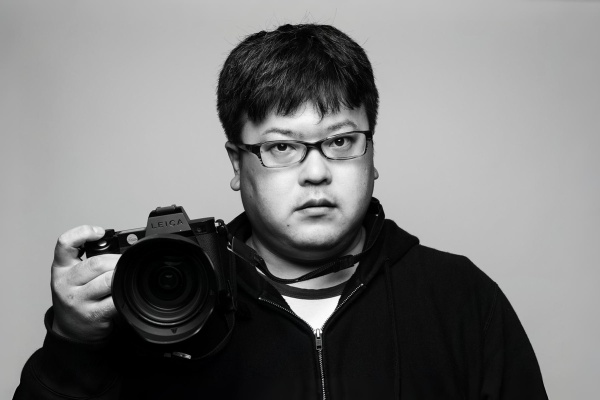
Kenta Tamura
1. Congratulations on winning in the European Photography Awards! Can you share a little about yourself, what inspired you to pursue photography, and how has your journey evolved since your first shot?
I don’t clearly remember what first inspired me to start photography. Since I was in elementary school, I loved taking pictures and often used the cameras we had at home or disposable cameras to capture snapshots.
As a lighthearted story, when I was a university student, I decided to buy a compact digital camera as a birthday gift for my girlfriend, saying, “Let’s use this to capture our memories together.” To be honest, I had already intended to use it myself, and it quickly became my own toy.
After starting my career, I began doing some poster design work on my own, and I wanted to be able to take beautiful photos. That’s when I bought my first DSLR camera, which truly drew me into photography.
In the beginning, I focused on creating general, beautiful photographs, but in 2022, I was struck by the emergence of AI-generated images, which led me to shift toward a more artistic approach. Now, I aim to create photographic art that AI can never replace.
2. Can you share the story or inspiration behind your award-winning piece? How does winning this award make you feel about your journey in photography?
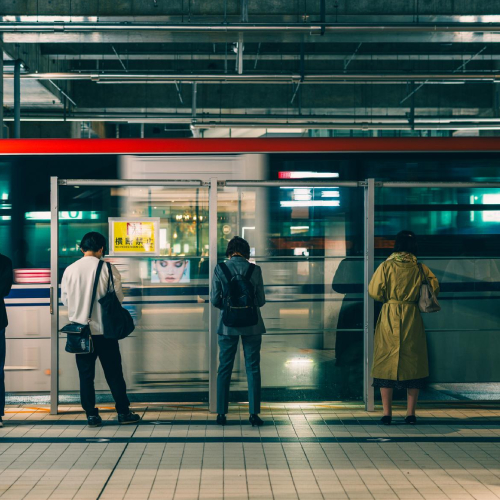
My Platinum-winning piece, Riverside Reverence, was created with the intention of capturing the beauty of the familiar, as stated in its description.
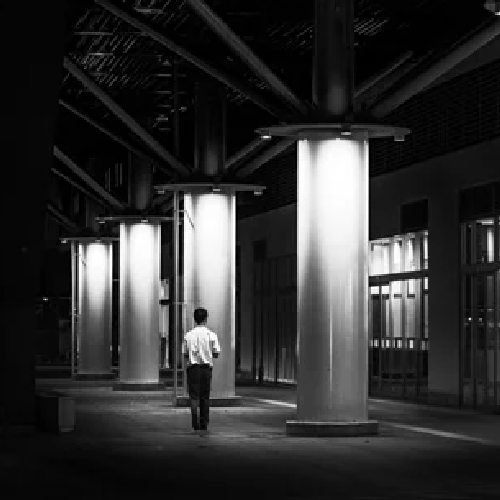
Lately, I have been exploring new forms of photographic expression, which has led me to create many images—like The Glorious Future of Street Photography—that may appear puzzling at first glance.
In that context, receiving an award for a more classic cityscape feels significant. I believe it shows that my skills extend beyond producing challenging or unconventional images and that I also have a solid foundation in traditional photography techniques.
This recognition has strengthened my confidence and given me a stronger base from which I can push further into more avant-garde forms of expression.
3. How do you decide which photo to submit for a competition?
This time, I simply chose a photograph that I personally love.
4. What first made you pick up a camera?
It was purely out of curiosity!
5. What’s your favorite type of photography, and why do you love it?
My favourite genre of photography is capturing everyday life through snapshots. People often dream of time machines in science fiction films, but in reality, the camera is the modern-day time machine that allows us to revisit our past memories. I love photographs that remind us of the journey we’ve taken in life the most.
When it comes to artistic expression, I love all genres. I photograph anything and everything—my curiosity is what drives me.
6. What’s your go-to camera setup, and why does it work best for your projects? What’s your favorite feature?
I change my equipment depending on the type of photograph I want to create. Since I carry a camera with me every day, I often go out with a compact digital camera that is easy to carry around. I don’t have a particular favourite feature, but I often use ND filters as part of my expression.
7. If someone looked at your work, what’s the one thing you’d want them to feel?
I strive to capture the beauty hidden in everyday life. The familiar often goes unnoticed, yet a closer look can reveal something truly beautiful. To see it, I believe one needs a richness of heart—because when our minds are clouded by stress, we overlook the small wonders around us, even something as simple as a flower in bloom.
Through my photography, I hope to awaken this awareness in others. When people realise how much beauty surrounds them, life naturally becomes more joyful and fulfilling. If my work can inspire even a small shift in perspective, leading to greater richness of spirit, then I feel I have achieved something meaningful.
8. What was the most challenging part of capturing your winning shot?
The Platinum-winning Riverside Reverence was captured during a spare moment, which made working quickly the greatest challenge. It is one of only two frames I was able to take within that brief window of time.
9. Is there a specific place or subject that inspires you the most?
My hometown, where I’ve walked countless times. No matter how many photographs I take there, it always reveals a new side to me.
10. Who or what has been your biggest influence in photography?
I believe AI image generation has had the greatest influence on me.
11. What message would you share to inspire photographers to participate in photography awards, and what advice would you give to help them excel in the competition?
Whether photography competitions are enjoyable or not depends on how you approach photography itself. However, for those with curiosity, a spirit of exploration, and the desire to improve, entering competitions can become an exciting new source of enjoyment.
To excel in competitions, I believe the most important factor is perseverance.
12. What’s one piece of advice for someone just starting in photography?
Don’t listen to other people’s advice. Instead, focus on exploring the kind of photography you truly want to create.
13. What role do editing and post-processing play in your creative workflow?
Editing and post-processing are essential to expressing my vision. In competitions, I shape them to align with the intent of the event, but beyond that, I see them as a limitless field of artistic freedom.
Just as some are born with difficulty perceiving certain colours, and just as the very concept of colour is something we learn after birth, I believe the interpretation of wavelengths—how we choose to portray them and how we hope others will experience them—should be entirely free.
For me, this ongoing exploration of colour is at the heart of my creative process, and it is why editing and post-processing will always hold a central place in my work.
14. How do you see technology, like AI, influencing the future of photography and your own approach?
Just as the Industrial Revolution once replaced many traditional occupations, technology such as AI will inevitably shape the future of photography.
However, at present, AI in photography can only generate from what it has learned through machine learning. My theme moving forward is to explore forms of expression that AI could never have imagined.
15. If you could photograph anything or anyone in the world, what would it be?
Even if I could photograph anything, I would still want to capture the happiness around me.