Felipe Martín-Serrano Ortiz
1. Congratulations on winning in the European Photography Awards! Can you share a little about yourself, what inspired you to pursue photography, and how has your journey evolved since your first shot?
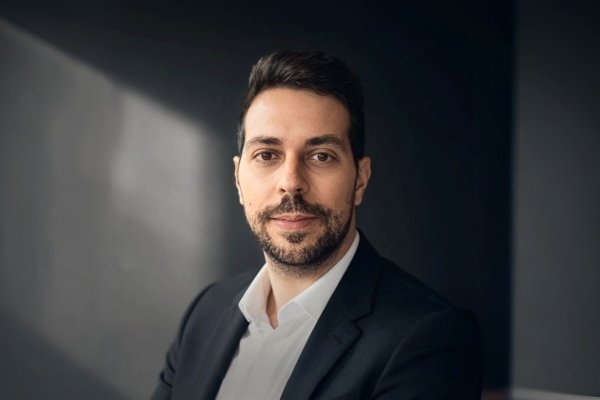
I am Felipe Martín-Serrano Ortiz, a Spanish photographer working under the name f90foto. Photography began for me as a way of learning to look more carefully: at light, structure and the small relationships that make an ordinary scene hold together. Since my first photographs, the journey has moved from simply recording what I saw to building images with a clearer intention, especially in urban spaces.
2. Can you share the story or inspiration behind your award-winning piece? How does winning this award make you feel about your journey in photography?
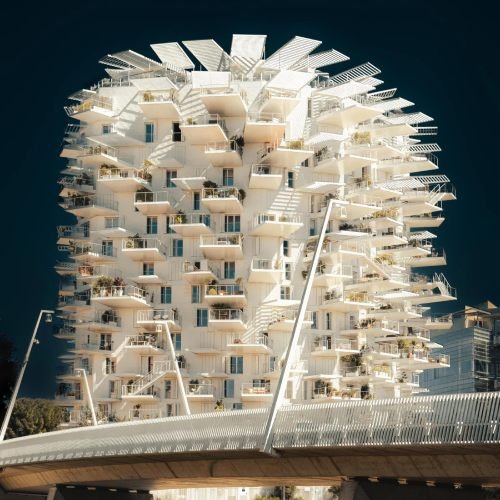
L'Arbre Urbain: Montpellier's white canopy came from encountering L'Arbre Blanc in Montpellier. I used a low angle and waited for something special to happened, until some cyclists entered the frame. This way the scale of the tower could coexist with everyday life below it. This award feels like an encouragement to keep following that kind of attentive, patient work.
3. How do you decide which photo to submit for a competition?
I submit a photograph when it has more than a striking subject: it needs a clear point of view, a coherent composition and a reason to stay with it. I also ask whether the image can communicate without a long explanation. A competition image should stand on its own, but still leave room for the viewer.
4. What first made you pick up a camera?
Curiosity was what first made me pick up a camera. I wanted to understand why a familiar place can look completely different depending on the light, the angle or the moment. The camera became a way to slow down and pay attention.
5. What’s your favorite type of photography, and why do you love it?
Architecture photography is my favourite because buildings are never only buildings. They contain geometry, light, texture and the movement of the people around them. I enjoy finding the moment when a structure becomes part of a lived urban scene.
6. What’s your go-to camera setup, and why does it work best for your projects? What’s your favorite feature?
My go-to setup is a Canon EOS R10 kept simple and responsive. It works well for my projects because it lets me move around a location and refine a composition without turning the process into a technical obstacle. Its compact handling and electronic viewfinder are especially useful when I am working with perspective, lines and changing light.
7. If someone looked at your work, what’s the one thing you’d want them to feel?
I would like people to feel that the places they pass every day deserve a second look. If an image makes someone pause and notice form, scale or light in a new way, it has done its job.
8. What was the most challenging part of capturing your winning shot?
The biggest challenge was finding the right balance between the building's monumental scale and the life happening around it. The low angle had to make the balconies feel expansive without losing the cyclists that gave the image its human measure. It was a matter of position, patience and timing.
9. Is there a specific place or subject that inspires you the most?
Cities inspire me most: their buildings, their rhythms and the way people move through them. I am drawn to spaces where strong design meets ordinary daily life, because that contrast often reveals the character of a place.
10. Who or what has been your biggest influence in photography?
My biggest influence is the built environment itself. I am constantly learning from architects, from photographers who work with geometry and light, and from walking through a city with no fixed image in mind. Observation is the influence I return to most.
11. What message would you share to inspire photographers to participate in photography awards, and what advice would you give to help them excel in the competition?
Enter work that means something to you, not only work that you think will be rewarded. Read the category carefully, edit with discipline and present the image clearly. Awards are useful because they make you articulate why a photograph matters; the strongest entry is usually the one whose intention and execution support each other.
12. What’s one piece of advice for someone just starting in photography?
Learn the technical basics, then spend time looking. Light, timing and composition matter more than owning more equipment. Photograph often, review your work honestly and do not be afraid to make many imperfect images while you discover what interests you.
13. What role do editing and post-processing play in your creative workflow?
Editing is an essential part of my workflow, but it begins after the photograph has been resolved in the camera. I use it to refine colour, contrast and perspective, helping the final image reflect what drew me to the scene. The aim is not to invent a different photograph, but to make the visual decision clearer.
14. How do you see technology, like AI, influencing the future of photography and your own approach?
AI will influence photography in useful ways, from organising archives to assisting with technical tasks. At the same time, it makes authorship and transparency more important. My own approach remains rooted in being present at a place, making a decision in front of the scene and being clear about how the final image was made.
15. If you could photograph anything or anyone in the world, what would it be?
I would like to photograph cities at the moments when their public spaces reveal something unexpected: a building, a person and a change of light briefly coming together. That combination is what keeps photography open for me.