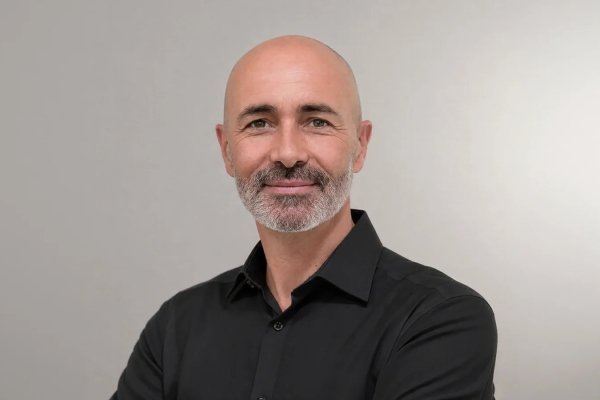
Roberto Pazzi
1. Congratulations on winning in the European Photography Awards! Can you share a little about yourself, what inspired you to pursue photography, and how has your journey evolved since your first shot?
Born in 1973 in Italy and trained as an engineer, I only discovered my true passions—travelling and photographing remote cultures—in 2013. From a very young age, I saw myself as a backpacker, but the desire to document and capture my experiences and emotions emerged much later.
My first experience as an amateur travel photographer took place in Indonesia, where I worked on a reportage about the Dani people, who live in relative isolation in the highlands of West Papua and were only brought to wider attention around 1938. That series of images gained significant visibility, particularly in the UK press, and marked the beginning of my career.
A couple of years later, I left my job and relocated from Italy to Spain, where I opened my own gallery. During that period, I also began collaborating with galleries in Singapore and Brazil. It was the first time I realised my dream could actually become a reality.
In 2018, I launched my own business, organising and leading photographic expeditions to remote cultures. The experience was deeply enriching and helped me better understand the path I wanted to pursue. Unfortunately, in 2020, the pandemic hit my business hard, forcing me to suspend all travel activities.
On the positive side, I suddenly had a great deal of free time, which I chose to invest in improving my photography skills and participating in competitions. The awards I received helped strengthen my reputation as a professional photographer and expanded my visibility.
Finally, in 2021, I partnered with Nomad Photo Expeditions to organise and lead photographic journeys—an activity that continues successfully to this day.
2. Can you share the story or inspiration behind your award-winning piece? How does winning this award make you feel about your journey in photography?
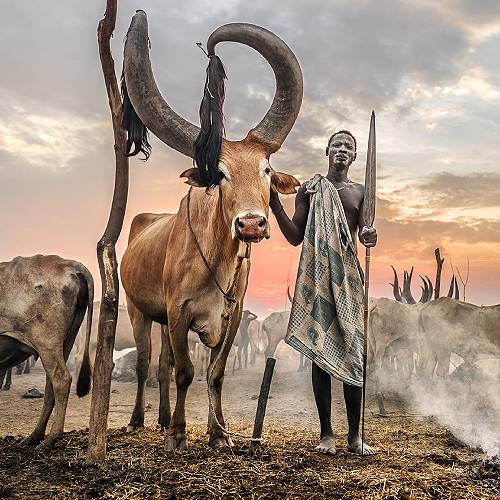
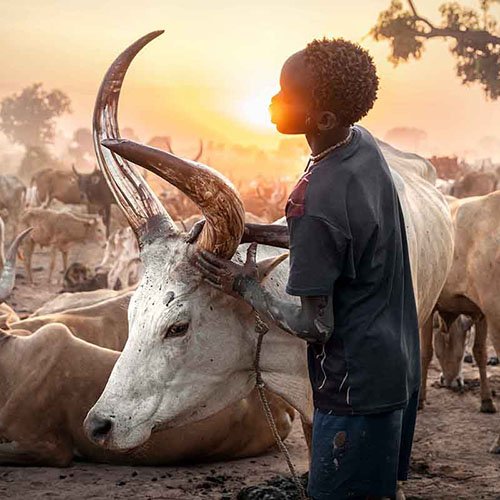
The award-winning photographs are part of a reportage documenting traditions and cultures that are at risk of fading away. My work focuses primarily on communities whose traditional ways of life are undergoing profound transformation.
My interest has never been rooted in exoticism or in the search for distant worlds. I am interested in human heritage: the knowledge, traditions, rituals, and values that communities have developed and passed down through generations.
Many of these cultural expressions are fragile. Globalisation, economic change, and social transformation are reshaping ways of life that have existed for centuries. These communities represent an important part of our collective memory. They remind us where we come from and reveal aspects of humanity that modern societies increasingly risk forgetting.
My role is to witness, understand, and document. I do not want to create stereotypes or impose my own interpretation. I want my images to communicate the complexity of human experiences and portray people with honesty and respect.
My long-term project, HUMANKIND, represents more than ten years of photographic exploration across three continents and more than twenty countries.
The project reflects the principles that have guided my work: creating images that preserve dignity and visibility. Its purpose is to encourage awareness and reflection, helping viewers look beyond differences and recognise the common humanity that connects us.
The communities documented in HUMANKIND are not frozen in the past. They are living societies, constantly adapting to change. Their traditions are active expressions of human experience and deserve to be recognised.
Photography contributes by creating visual memory. An image can become a testimony to a historical moment and preserve an awareness of the richness contained in human diversity.
Preservation begins with knowledge. Knowledge creates understanding; understanding creates respect; and respect creates the possibility of protection.
3. How do you decide which photo to submit for a competition?
First of all, I chose a project I was particularly passionate about. From the entire body of work, I then selected the photographs that complemented one another and stood out for either their documentary value or their artistic significance.
4. What first made you pick up a camera?
For fifteen years, I built my career in the field of Information and Communication Technologies. I held a prestigious, well-compensated position, complete with numerous benefits and a clearly defined, socially recognised role. Yet despite these achievements, something essential was missing: happiness.
This profound sense of incompleteness led me to embark on an inner journey, questioning myself deeply in search of what could truly fulfil me. I wanted to discover what I wanted to do, rather than continue living a life shaped by what I felt I had to do. The answer soon became clear: travel and photography.
5. What’s your favorite type of photography, and why do you love it?
I am particularly drawn to travel and documentary photography. I am deeply inspired by capturing cultures, traditions, and customs, yet I always strive to share my personal vision and interpretation, both through the act of photographing and in the subsequent editing process.
I see my passion for travel and photography as a journey through the timeless richness and delicate fragility of our shared human heritage, shaped by traditions and cultures that are often at risk of fading away.
By capturing the essence of some of the world's most remote communities, I aim to pay tribute to the extraordinary beauty of human diversity. My work seeks not only to honour the resilience of these communities but also to encourage reflection on the fragility of their irreplaceable legacies.
Our shared cultural heritage—which has shaped and continues to shape the world we inhabit—faces an uncertain future. As modernity advances, ancient ways of life stand at a crossroads, suspended between preservation and transformation.
By bringing these extraordinary cultures to light, I hope my photography fosters a deeper appreciation of their significance and underscores their vulnerability. True preservation begins with knowledge and awareness, for understanding is the first step toward respect and protection.
6. What’s your go-to camera setup, and why does it work best for your projects? What’s your favorite feature?
I always use my camera in full manual mode because I like to personally interpret every shot I take. I would describe my photography as a blend of artistic expression and documentary storytelling. I am deeply drawn to capturing cultures, traditions, and customs, yet I always aim to share my personal vision and interpretation, both through the act of photographing and in the subsequent editing process.
As for my most valuable skill, I would highlight my ability to build relationships with the people I photograph. Portraying human subjects requires a refined ability to connect and engage with others—a true exercise in soft skills.
The key is to establish a bond of trust with my subjects while ensuring that the resulting images remain as natural and impactful as possible. To achieve this, I devote as much time as circumstances allow to being with the people I photograph, often immersing myself in their community.
This approach comes naturally to me, driven by an innate curiosity and a genuine interest in discovering the cultures and stories of those I encounter. Depending on the context, travel conditions, and other circumstances, I may spend anywhere from a few hours to several weeks cultivating a meaningful connection with my subjects.
7. If someone looked at your work, what’s the one thing you’d want them to feel?
I consider my passion for travel and photography a journey through the timeless richness and delicate fragility of our shared human heritage, shaped by traditions and cultures that are at risk of fading away.
In capturing the essence of some of the world's most remote communities, I strive to pay tribute to the extraordinary beauty of human diversity. My work not only honours the resilience of these communities but also invites reflection on the fragility of their irreplaceable legacies.
Our shared cultural heritage—which has shaped, and continues to shape, the world we inhabit—faces an uncertain future. As modernity advances, ancient ways of life stand at a crossroads, caught between preservation and transformation.
By bringing these extraordinary cultures to light, I hope my photography fosters a deeper appreciation of their significance and underscores their vulnerability. True preservation begins with knowledge and awareness, for understanding is the first step toward respect and protection.
8. What was the most challenging part of capturing your winning shot?
Certainly, the most challenging aspect was managing the logistics over a period of more than two weeks, while also working with the changing light conditions during the earliest and latest hours of the day.
9. Is there a specific place or subject that inspires you the most?
My main inspiration stems from my curiosity about the many cultures of the world, especially those that are vastly different from our own and at risk of disappearing. Meeting people from diverse backgrounds and sharing their stories and traditions through my photography is what I enjoy most.
Anthropological photography also often requires building a relationship with the subject, making it easier to interact with them. This provides a valuable opportunity to learn more about their personalities, lives, and customs, while identifying the elements that help tell their story.
As a result, every destination becomes a profound life experience, teaching me something new and meaningful each time. These experiences are unique gifts—like precious stones that I collect to enrich the mosaic of my life.
10. Who or what has been your biggest influence in photography?
At the beginning of my career, my main influences were Sebastião Salgado and Steve McCurry. I also drew inspiration from Renaissance painters—especially Caravaggio—for their masterful use of light.
More recently, I have found inspiration in the work of many photographers, as well as in individual images I come across on social media.
11. What message would you share to inspire photographers to participate in photography awards, and what advice would you give to help them excel in the competition?
I would recommend focusing on projects that you genuinely enjoy, rather than on the photographs that receive the most praise from others. Rather than seeking widespread approval, stay true to the work that best represents you and your unique style.
12. What’s one piece of advice for someone just starting in photography?
I advise against investing heavily in the latest technology at the outset. Instead, focus on dedicated practice. Every photographer should strive to develop a distinctive style—a true signature that uniquely defines their work.
To achieve this, one must commit to learning, preferably through self-directed study. The internet offers an abundance of resources, but nothing can replace consistent practice. Studying the portfolios of other photographers can also help cultivate a discerning eye and provide valuable inspiration.
Undertaking a long-term project can be instrumental in achieving your artistic goals. By breaking it down into manageable tasks—such as mastering techniques, building a website, refining editing skills, and engaging on social media—you can effectively chart a course toward your ultimate objective.
Finally, I encourage photographers to focus on the type of photography that genuinely resonates with them, rather than chasing trends or subjects that may offer immediate financial rewards but lack long-term fulfilment.
13. What role do editing and post-processing play in your creative workflow?
Post-processing plays a meaningful role, but it is certainly not the most important one. I prefer to spend as much time as possible behind the camera rather than behind a laptop.
14. How do you see technology, like AI, influencing the future of photography and your own approach?
We live in a world that is, above all, visual—a world where information is exchanged at an ever-increasing pace, favouring images over text, or at least giving them an increasingly dominant role. As technology continues to advance, both travel and photography will become more accessible to everyone.
Consequently, much like in other fields, we can expect a growing "inflation" of travel images. The challenge of the future will be to continually refine our craft in order to stand out and thrive within this beautiful and ever-evolving landscape.
As in many other sectors, AI will play an increasingly important role in the world of imagery, but it can never replace the sensitivity and eye of the photographer. Technology is just a tool. Its value depends on the intention and responsibility behind its use.
In a world dominated by speed and constant visual consumption, meaningful photography will increasingly depend on what technology cannot replace: curiosity, emotional depth, human relationships, and purpose.
A powerful photograph is created through understanding, patience, observation, and connection. The most important tools of a photographer are the ability to look, listen, feel, and engage with the world.
For those entering documentary photography, the priority should not be equipment but the development of curiosity, sensitivity, empathy, and a personal vision.
The image must remain connected to a real person, a real experience, and a real story. Authenticity is essential in a time when images can easily be manipulated and separated from reality.
Aesthetics are important because they strengthen communication, but they should serve meaning rather than replace it. A personal photographic voice develops slowly through experience, mistakes, dedication, and exploration. It cannot be created artificially or borrowed from trends.
I believe strongly in long-term projects because they allow photographers to move beyond superficial observation and develop a deeper understanding of their subjects. The strongest stories grow through time, commitment, repeated encounters, and genuine immersion. Photography is ultimately an act of attention, an inner way of looking at the world and understanding others.
15. If you could photograph anything or anyone in the world, what would it be?
Certainly, there are still communities and traditions that I have yet to photograph. I would likely prioritise those that are at greater risk of changing or disappearing within the next decade. I also tend to give preference to destinations I have never visited before, particularly those with a strong cultural identity.
Another important factor is the opportunity to experience cultural or religious celebrations that may take place during my visit.